
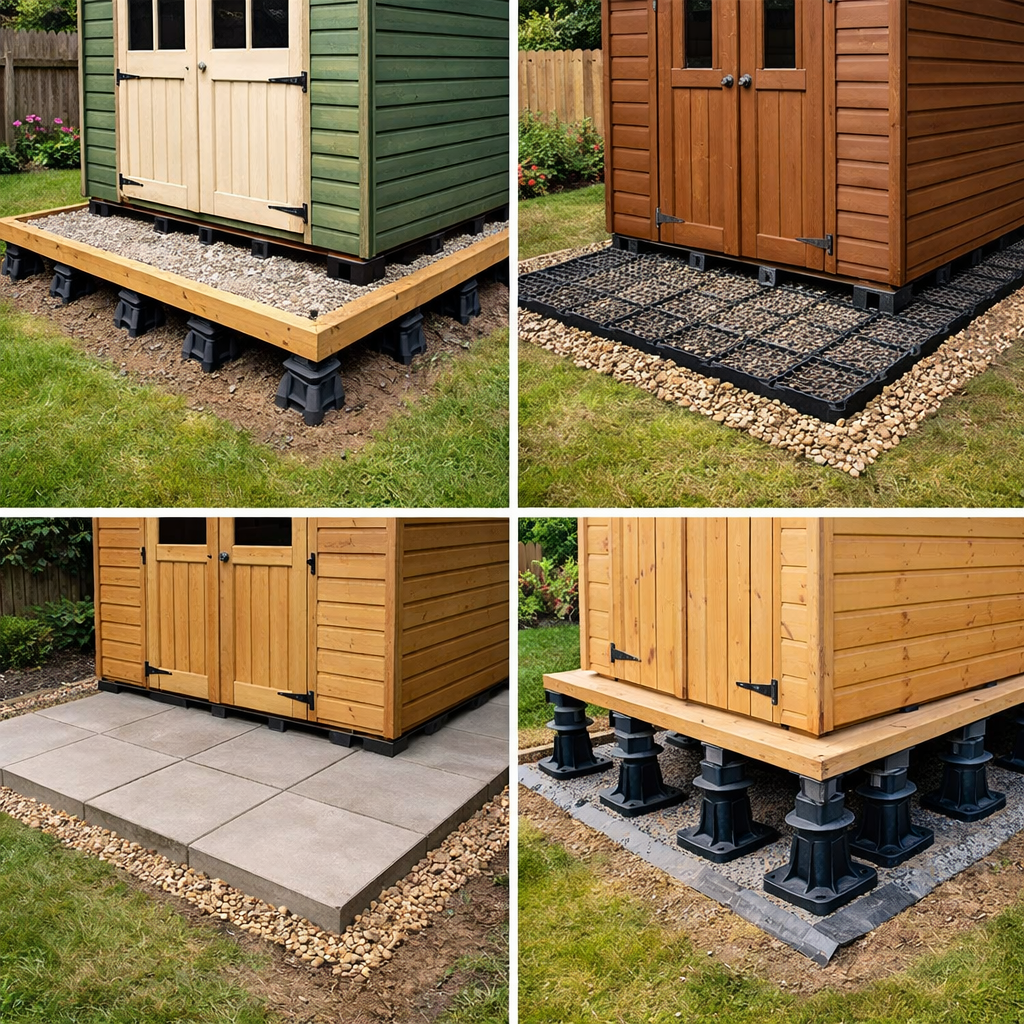
It is essential to lay a solid and level foundation for every garden shed. Weather and ground variability in the UK make it more necessary to use garden shed bases. Garden shed bases act as barriers against movement, listing, and damage by moisture buildup. By using proper shed bases, you are sure of benefiting from the purchase of a garden shed.
Why Garden Shed Bases Matter
Garden sheds are not storage containers alone. They house tools, bicycles, season alleles, and sometimes heavy equipment. Inefficient garden shed base designs cause gardens to slope, warp, or become damaged. Soil in most British gardens can be expected to expand during moist conditions and subsequently contract during drier times. Clay soils make these tendencies worse. Garden shed bases elevate a garden shed above ground level while preventing water contact.
Additionally, it allows for proper functioning of doors and windows. It ensures that water runs off around the boundaries of the shed. It also helps to enhance the lifespan of your garden shed by not straining it. In conclusion, garden shed bases form a firm foundation that safeguards both structures and their contents.
Types of Shed Bases
There are different types of bases for sheds that can be found in the UK. Each type of base has its own set of advantages.
Concrete bases provide strength and durability. They are best suited for the construction of large sheds and even for storing heavier equipment. Concrete is professionally installed and requires time for setting.
Plastic shed bases are very light in weight, simple to install, and very flexible. They also enable drainage. The plastic shed base will not be affected by ground movement. They are also immune to decay.
Timber Bases are suitable for small sheds. Timber Bases can be easily erected. However, Timber Bases have to be maintained to protect them from damage by moisture and insects.
Gravel Or Aggregate Bases provide flexibility. Gravel or aggregates work well with irregular terrain and provide natural drainage. Although, they tend to move under heavier pressure.
Professional shed base installers may recommend plastic or concrete shed base options for long-term stability for gardens in Britain.
How Shed Bases Keep Sheds Level
The shed bases provide even surfaces through effective site preparation and setting up. Firstly, the site is cleaned to eliminate debris and all forms of vegetation. Secondly, leveling is done on the site to ensure an even surface made of compressed sand and gravel. Thirdly, a weed membrane is placed to prevent growth underneath the shed. Finally, the shed base materials, which could be concrete, plastic, and timber, are erected.
Specialists verify the measurement a number of times to ensure against uneven ground. Installing the base properly will distribute the weight of the shed evenly. This will not cause the shed to be inclined, sag, or be under stress. Proper base installation will ensure the shed levels on clay ground or gently sloping land.
Benefits Of Professional Installation
Professional installation of shed foundations is considered to be very valuable. Specialists are aware of the local soil type and climatic conditions. They select the most suitable material for your garden. This includes proper leveling. It also includes proper drainage.
Professional installation of shed bases eliminates possible future issues. The sheds will be stable, with easy-opening doors and water drying away from the foundation base. It also saves time and efforts for homeowners. With professional advice, the lifetime foundation base will be constructed.
Key Advantages Of A Quality Garden Shed Base
- Prevents shed tilting and movement
- Protects Against Moisture & Water Damage
- Increases the lifespan of the shed
- Enhances door and window function
- It supports heavy storage items without any structural problems.
- Gives a clean, even, and professional finish
Choosing The Right Shed Bases
In making your shed base choice, you need to consider the size of your shed. For large sheds, your best options are concrete or plastic bases. For smaller to mid-sized shelters, plastic or timber bases can work well for you. The type of soil you have on your yard impacts your ultimate base choice. For clay soils, you may need to consider stronger foundations. For sand soils, further support may be necessary.
Homeowners should also look at ease of installation and maintenance. Plastic shed foundations are very low maintenance and do not rot. Concrete shed foundations are very low maintenance but a bit inflexible should you decide to move it to a different location.
Local shed foundation installers can offer experienced recommendations. Local installers analyze the soil type, grade, and drainage. The best remedy for a level and lasting solution is provided.
Long-Term Value Of Shed Bases
Making a proper foundation for garden sheds will provide long-term stability to the structures rather than increasing their cost with each subsequent fix. These sheds will be stable, safe, and functional for many years to come with levels staying straight, protected, and in good looks too.
Properly laid foundation bases for sheds enhance the value of your property. This is because a shed foundation base prevents damage to structural components of your building. In addition, well-placed foundation bases for sheds improve functionality.
Final Thoughts
Shed bases for gardens play a critical part in ensuring that sheds are not tipped over or affected by water. Shed base materials available include concrete shed bases, plastic shed bases, wood shed bases, and gravel shed bases. The material that you select depends largely on the weight and size of the shed. Installing a good quality garden shed base will protect not only the shed but also the items you store and your garden. By installing a proper garden shed foundation, you ensure the shed stays upright, solid, and functional for a longer period, irrespective of the season.






Leave a Reply